Managing large landscapes such as the Mitsui Ranch Preserve can be a daunting task. With over 600 acres, our team is continuously managing the landscape by combating nonnative vegetation and supporting soil health, which in turn helps support native ecological function. Nonnative plants such as invasive thistle species (yellow starthistle; milk; Italian) and annual grasses, were introduced as early as the 1500s and have replaced many native plants, shifting historically perennial-dominated bunch grass ecosystems to shallow rooted annual-dominated grasslands. One tool that allows us to combat these invaders, is prescribe fire (prescribed burning).
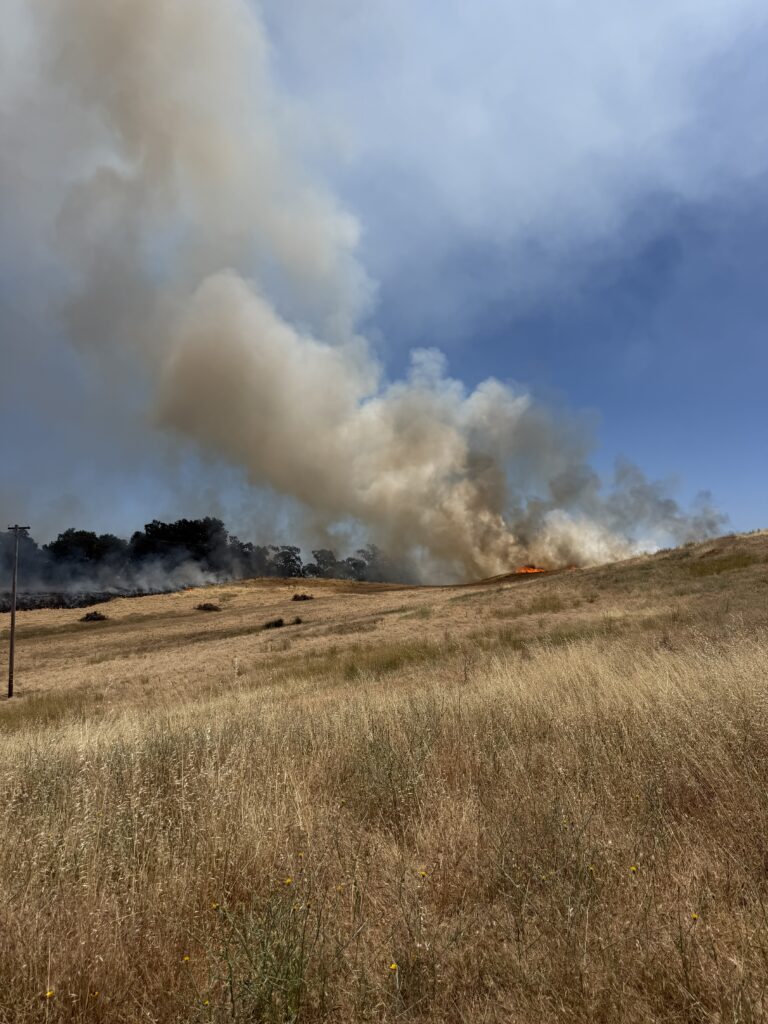
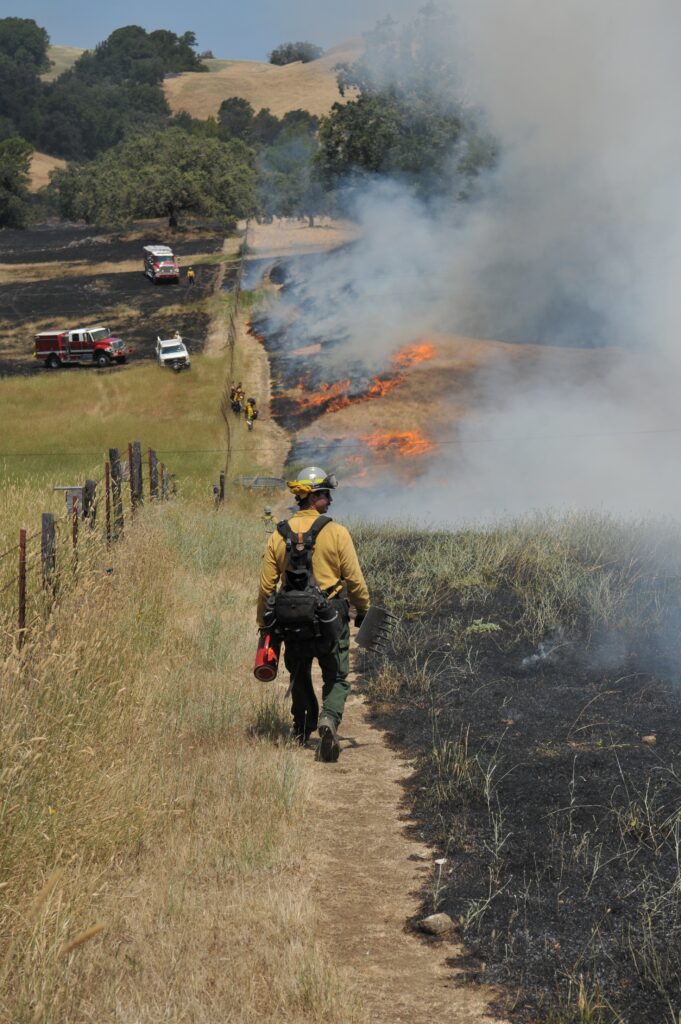
Prescribe burn underway on the east side of Mitsui Ranch Preserve
Collaborating with All Hands Ecology
At the end of June 2026 Mitsui Ranch Preserve worked with All Hands Ecology’s Fire Forward program to burn ~40 acres. This effort primarily targeted invasive annual grass Medusahead (Elymus caput-medusae), in addition to the annual forb yellow starthistle (Centaurea solstitialis). Working with a team of over 30 people, and with support from CalFire, this year’s prescribed burn was conducted professionally and showcased the expertise and collegiality of these organizations. We also welcomed several of our neighbors on Sonoma Mountain to observe the burn, providing opportunity for our community to ask questions and consider using fire as a tool on their properties as well.
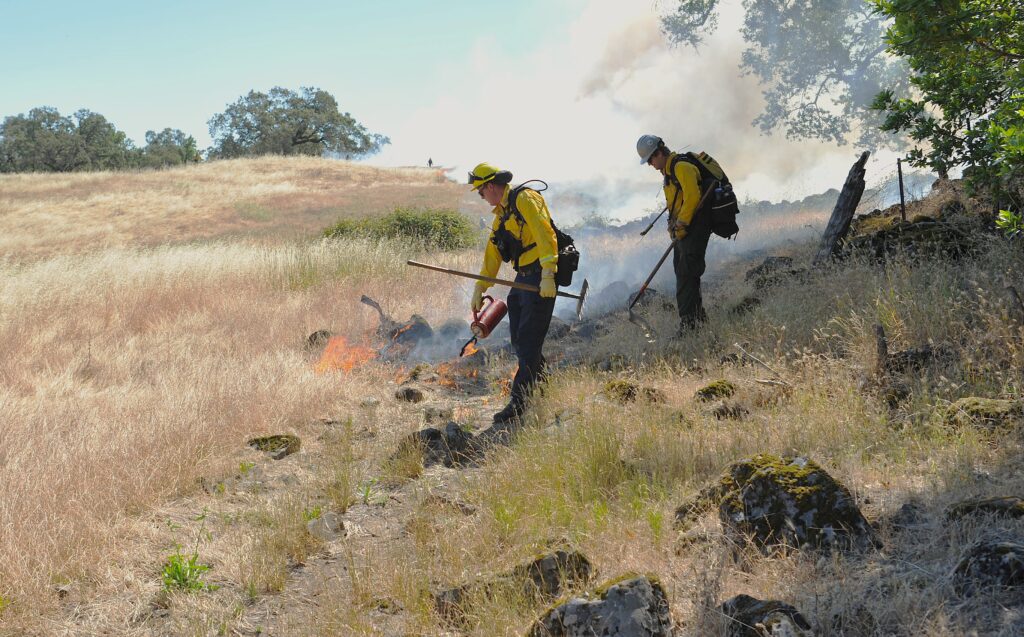
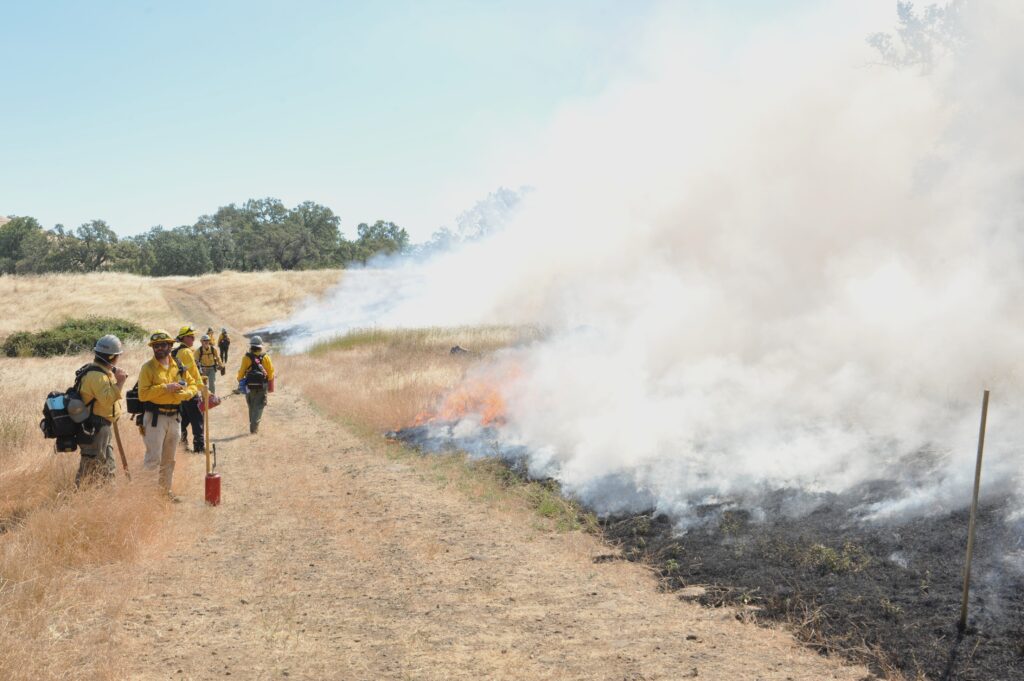
Staff from All Hands Ecology use a drip torch to start the fire around the perimeter of the burn area
Timing Burns for Success
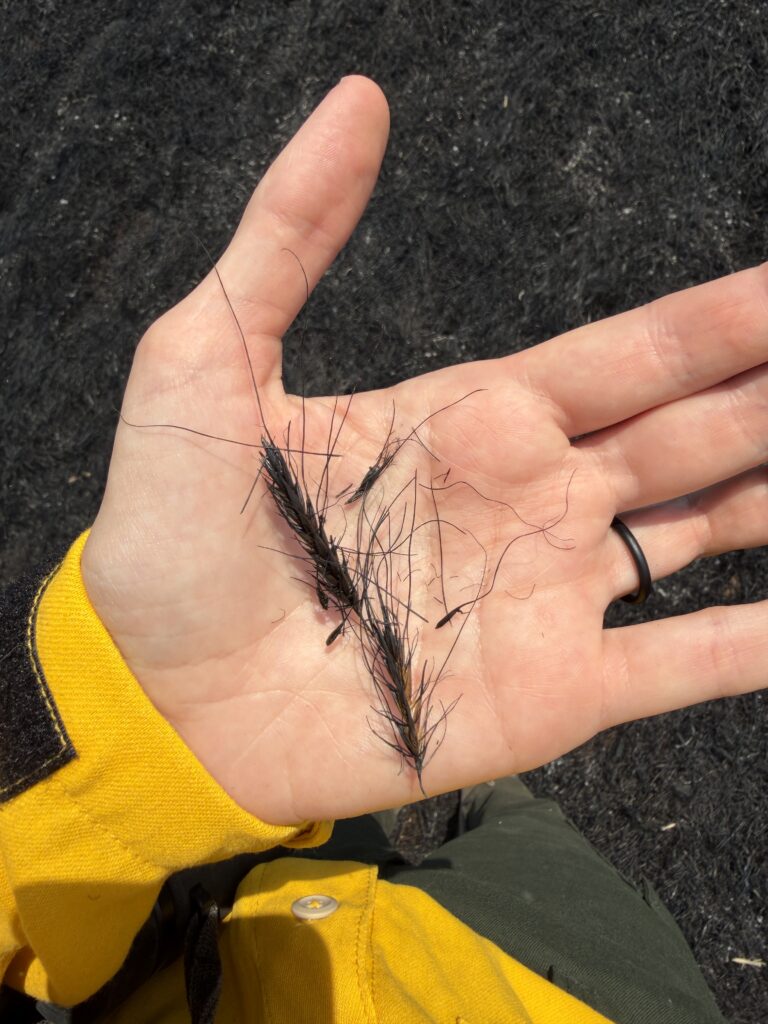
Burnt medusahead seeds post burn, displaying their awns crumbling post burn
Although it may not seem like an ideal time to burn, prescribe burns are often conducted during the summer months to target specific species. After scheduling burns around the most ideal and safe weather conditions (low wind, and reasonable temperatures) these efforts can be extremely effective at targeting certain species. For example, Medusahead is an ideal candidate for summer burns, as their seed heads will be in the “dough” stage, where the seeds can be easily squished (like toothpaste) and are more susceptible to fire. If Medusahead seeds are not removed prior to the end of this stage, the exterior of the seedhead will harden and the seedhead awns (hair-like projections that extend from the seed) will curl and lengthen, allowing the seed to screw itself into the soil where it can persist for many years. The long awns not only help this plant seed dig into the soil, but also serve as a deterrent to livestock because cattle find the awns unpalatable and avoid eating them. As Medusahead relies on large seed crops each year to increase their presence on the landscape, using fire to prevent this can be highly effective in controlling spread by reducing the annual seed crop.
Cascading Effects of Burning
Targeting nonnative grasses also helps reduce the density of shallow-rooted nonnative annual grasses; helping to even the playing field for our deep-rooted perennial native grasses. The difference in evolutionary adaptations between annual and perennial grasses play a big role in why invasive annual grasses have been so successful colonizing California: annual grasses have shallow root systems allowing them to acquire water and other resources near the soil surface, preventing resource acquisition from our more deeply rooted perennial grasses. Further, annual grasses, as the name suggests, have only one annual growing cycle, leading to thatch buildup on the soil surface where high concentrations of these grasses occur, effectively blocking sunlight from reaching young native perennial grasses.
This is where prescribe burns also come in handy. Fire reduces thatch build up and transfers nutrients through burning resulting in the subsequent break down of organic materials (thatch) which get incorporated back into the soil. In areas targeted for burns, we actually help reduce the likelihood of high intensity wild fires, which are often fueled by excessive amounts of vegetation accumulation. Further, as fire has been a tool for hundreds of years used by indigenous people on the landscape, perennial grasses are adapted to low intensity burns. Their deep roots respond well to disturbance, and are often the first grasses to reappear, post-burn.
View of the burn on the east edge of Mitsui Ranch Preserve
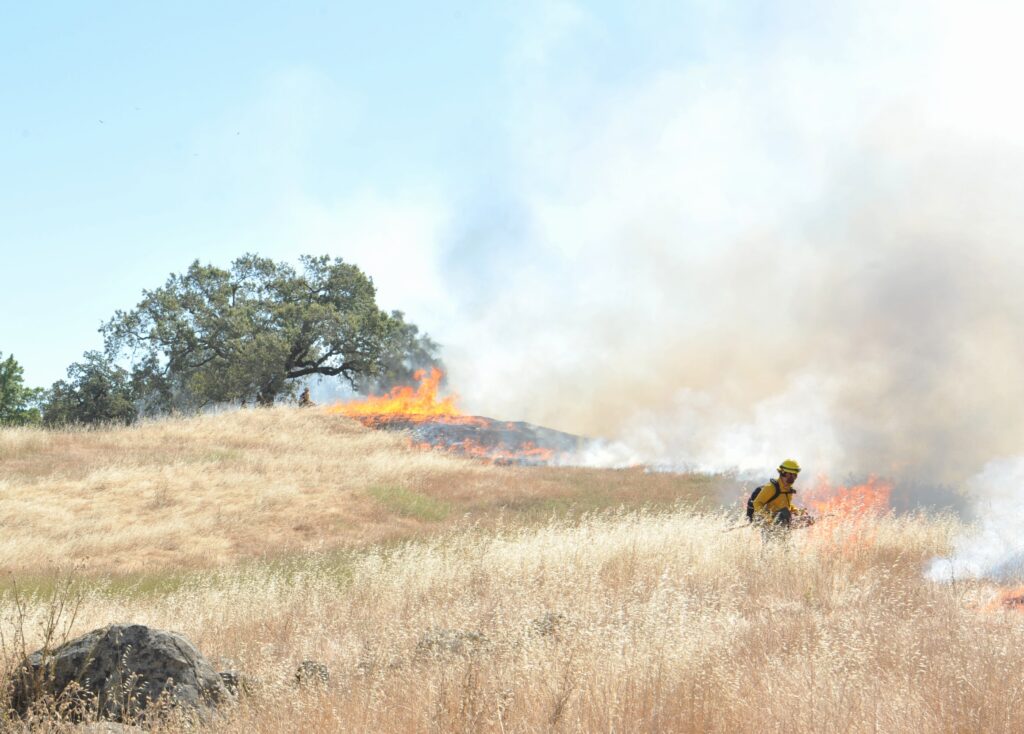
All Hands Ecology and Calfire staff monitoring the fire progression
Perennial Grasses Return
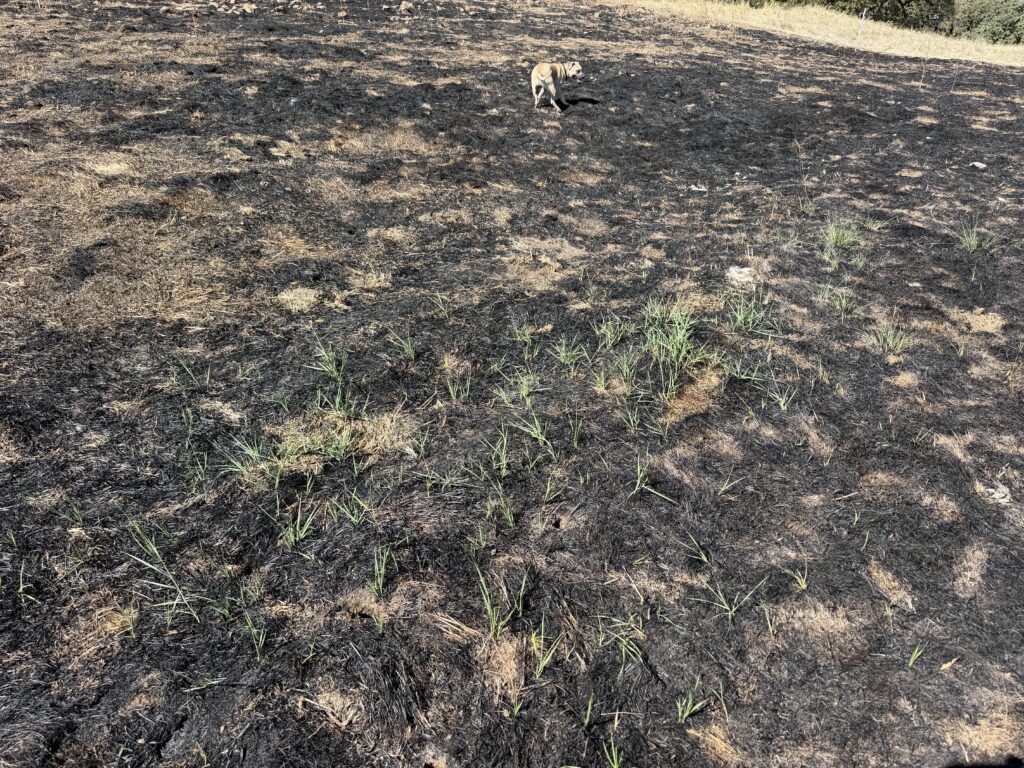
Creeping wild rye is among the first natives grasses to resprout post fire
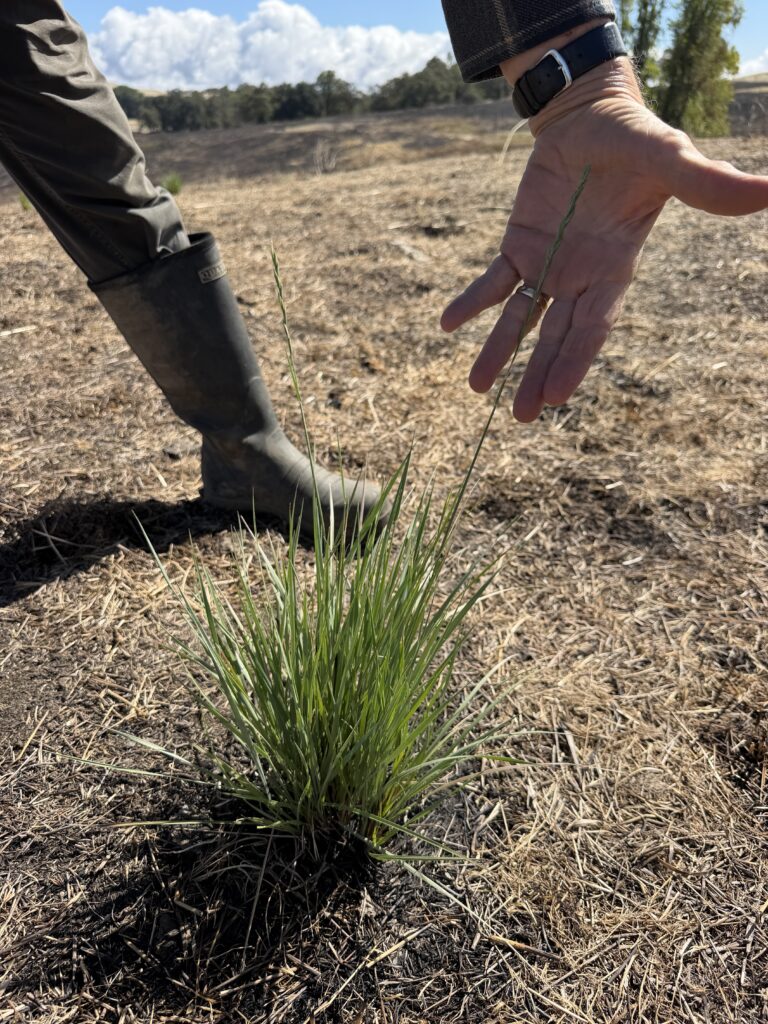
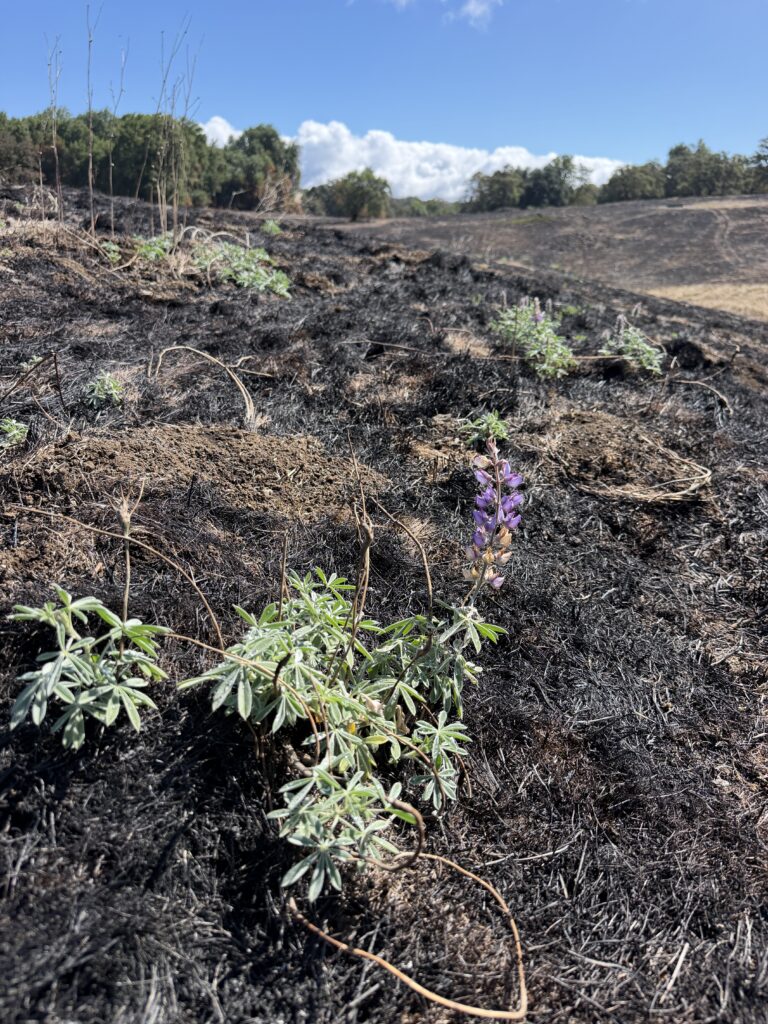
Barely 3 months later, we are already seeing some of our perennial grasses returning post burn, including Creeping wild rye (Elymus triticoides) and slender wheat grass (Elymus trachycaulus). Soon our managing ecologist Jeff Wilcox will take this effort a step further and begin reseeding the burned area with native grass seed; most of it from seed collected on the preserve. The native grass seed, a 6-species mix of perennial grasses, is grown out and amplified in Colusa County by Heritage Growers.
Slender wheat grass producing seed heads
It's not only grasses! A native species of lupin is also among the first to resprout post fire