Sonoma State University recent graduate student Hale Garcia-Dean recently presented their master’s thesis work on California red-legged frogs (Rana draytonii) at two conferences in California! These two conferences, The Wildlife Society Western Section and the California Nevada Amphibian Populations Task Force are held annually and gather wildlife professionals to discuss conservation and management of native species. These conferences gave Hale the opportunity to share some of their research findings to a broad audience of conservation minded professionals.
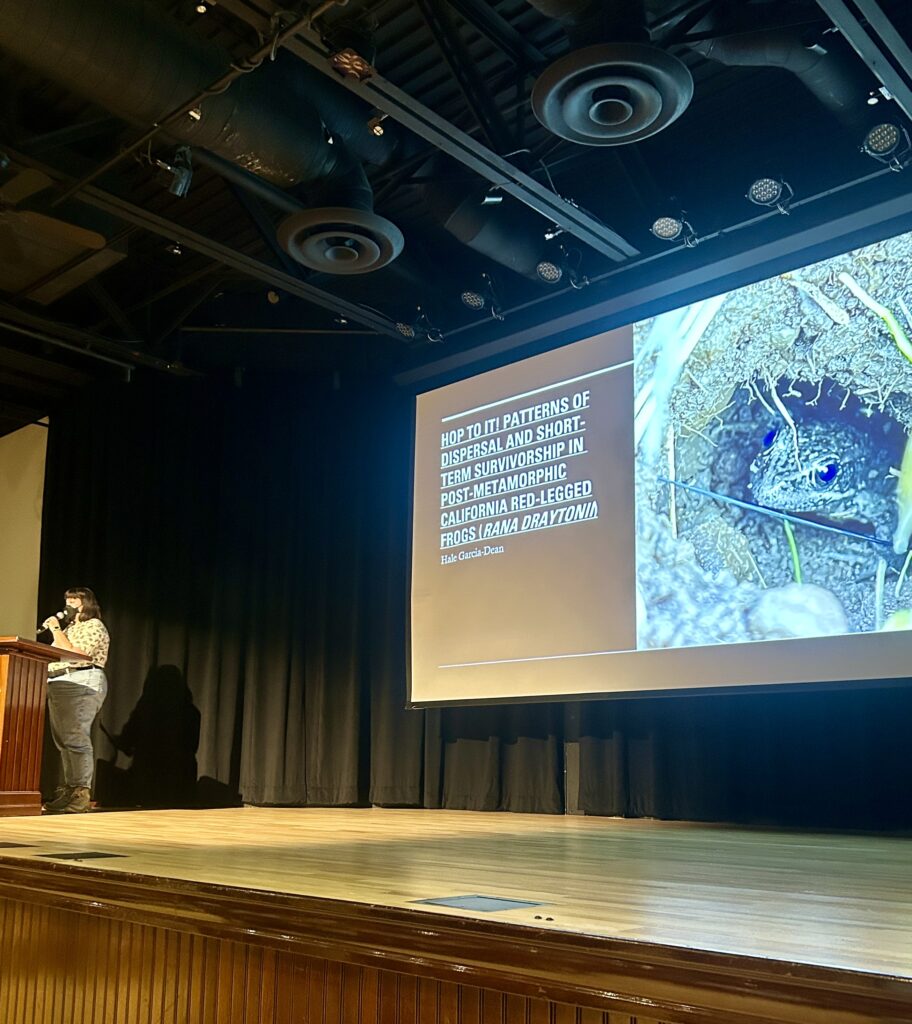
Hale presenting at the California Nevada Amphibians Populations Task Force meeting in Chico, California
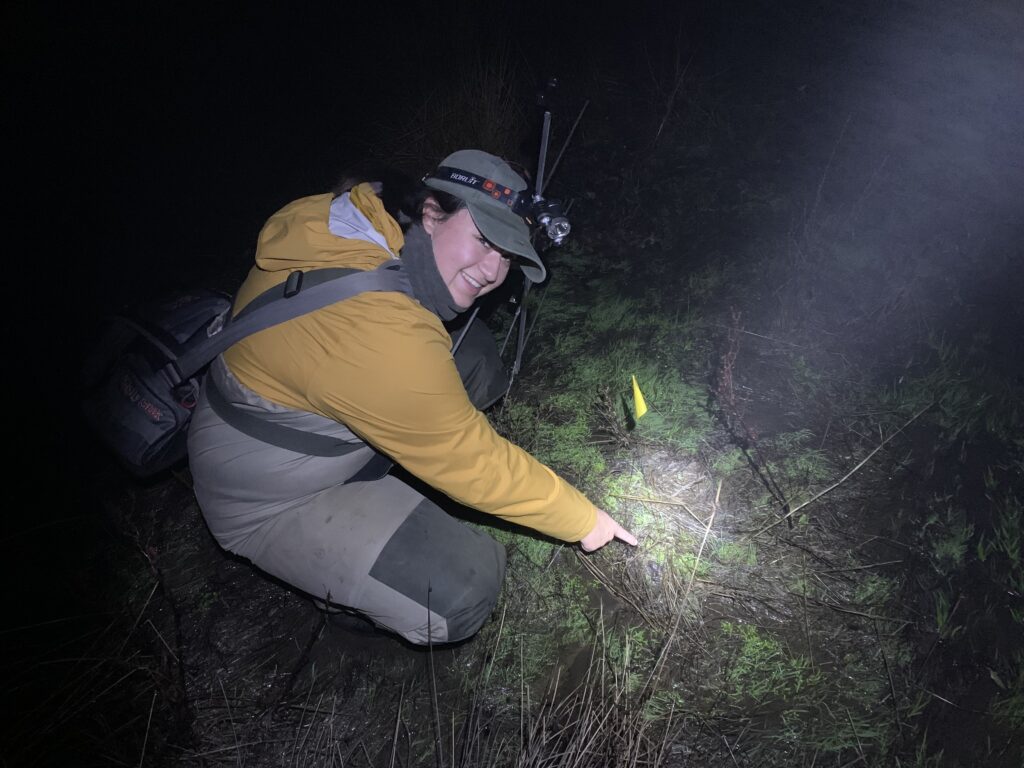
Hale pointing at a cryptic California red-legged frog found hidden in a layer of thatch in a grassland habitat
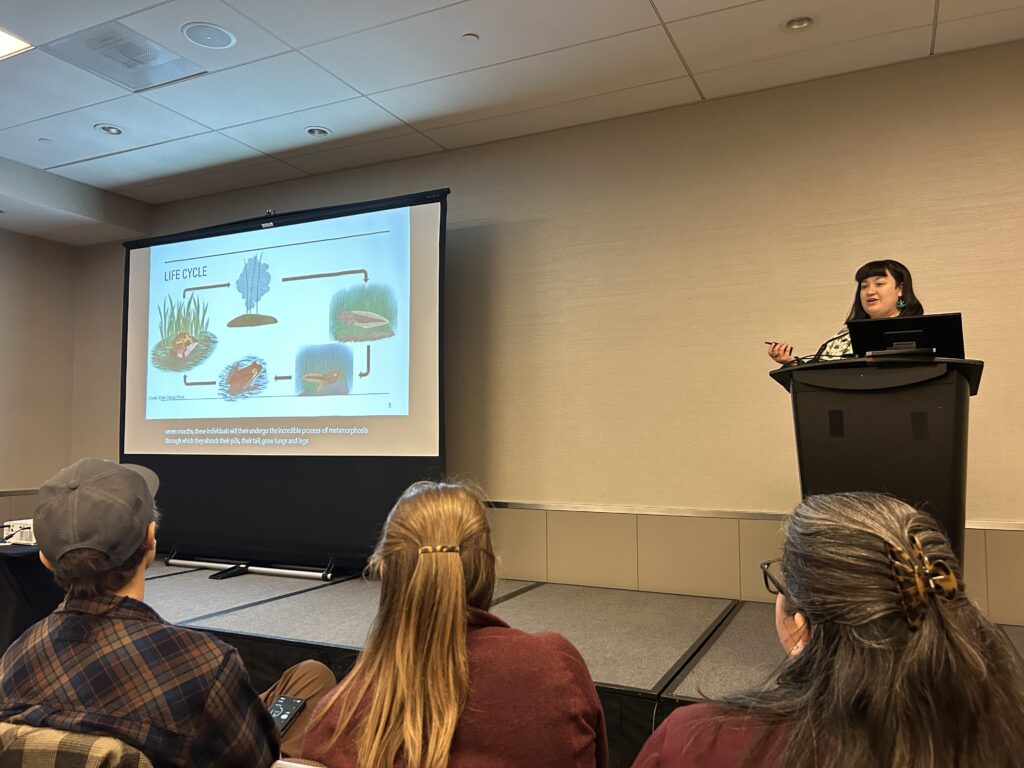
Hale presenting at the Western Section Wildife Society conference in Monterey California
Sharing the findings of Hale’s study is especially important as the California red-legged frog are a threatened species, and furthering our understanding of their initial dispersal patterns can help shape management recommendations and decisions.
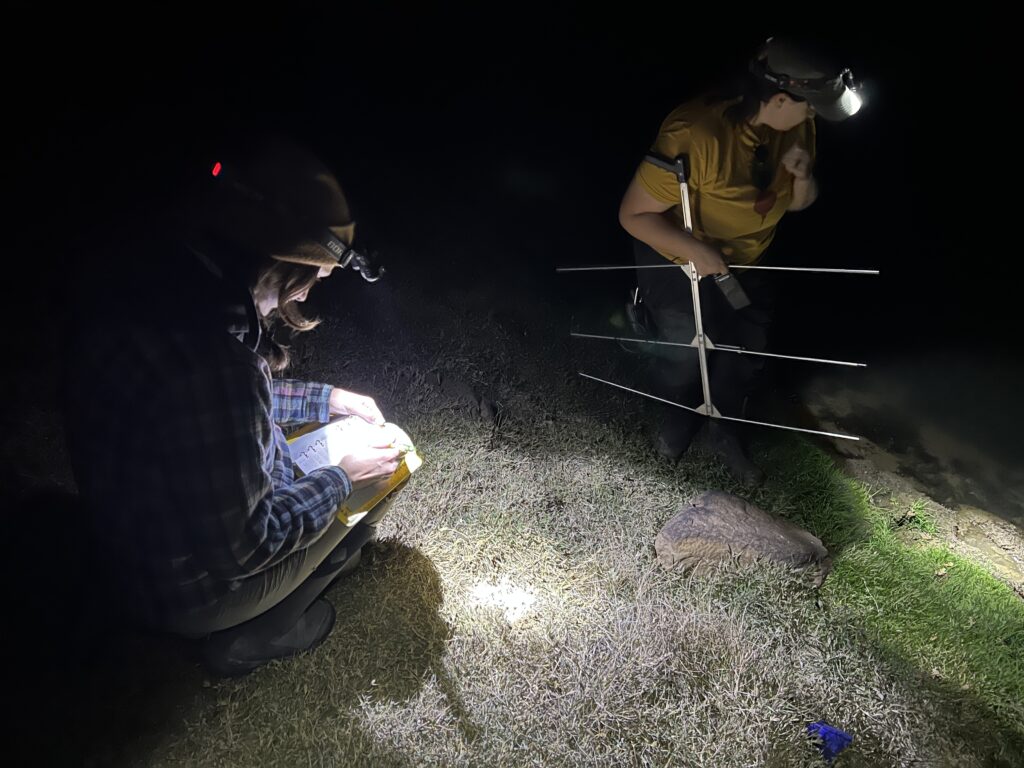
This project used radio telemetry to determine how recently metamorphosed California red-legged frogs disperse into the upland environment. They found that despite no prior knowledge of the landscape, these young frogs were still able to orient nonrandomly toward forested areas containing protective canopy cover away from the pond. As amphibians, these frogs rely on protected areas that contain moisture to prevent their bodies from desiccating.
Hale’s study also found differences in dispersal related to body size; demonstrating that larger frogs tended to stay near their natal pond rather than dispersing to a new aquatic site. Larger frogs also had a higher survivorship than smaller frogs, emphasizing the importance of eating and growing fast!
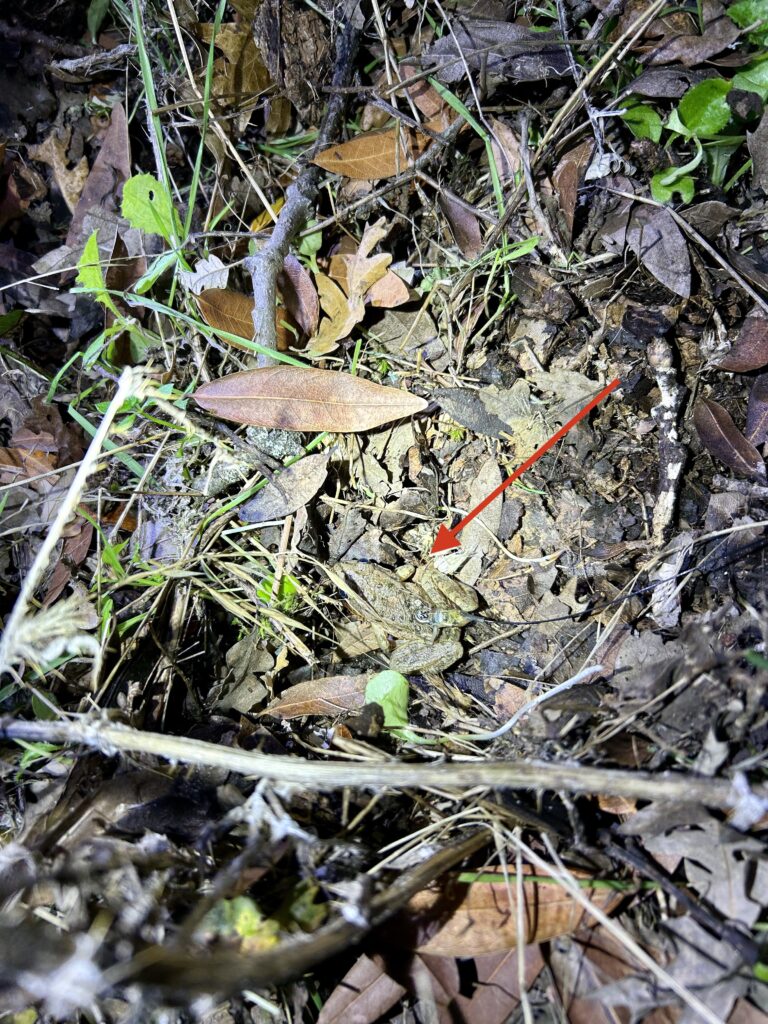
A belted California red-legged frog observed sitting in some leaf litter
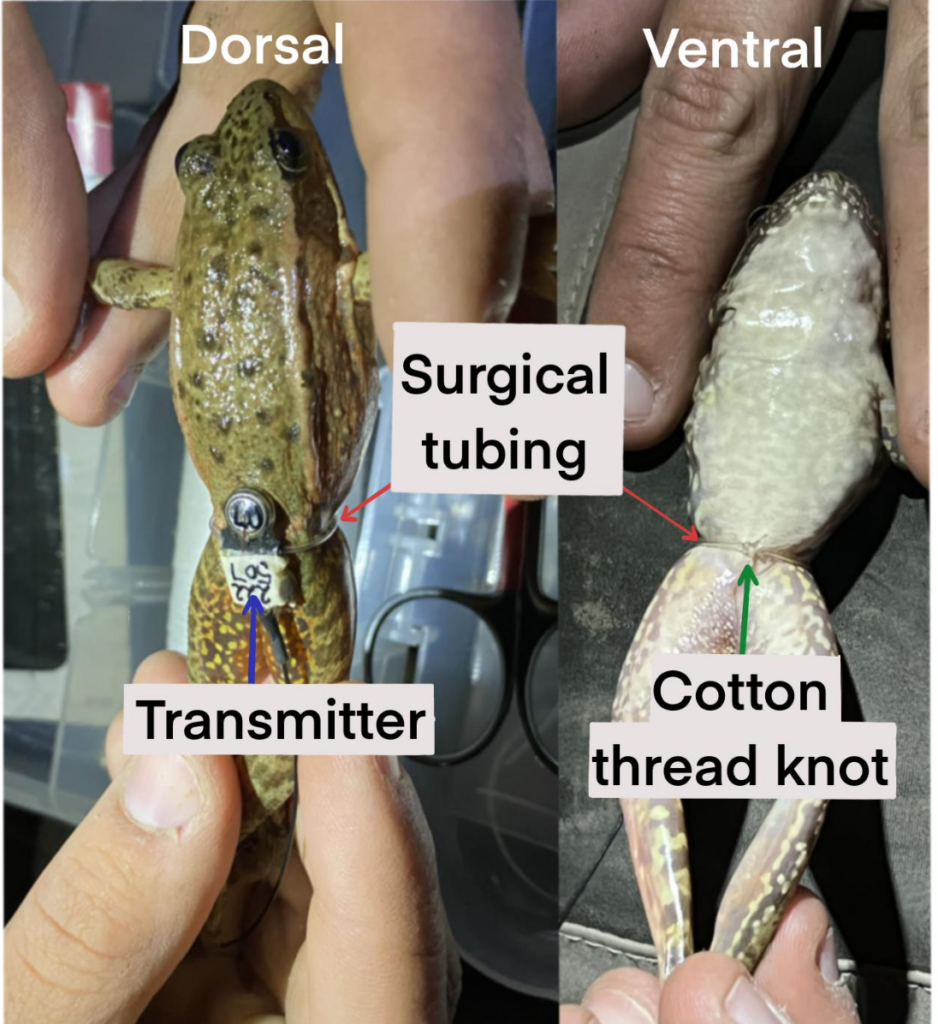
Diagram depicting the telemetry transmitter attachment method developed by Hale
This project not only uncovered the movement patterns of these young frogs, but also used a unique method to attach telemetry transmitters to the frogs. This technique uses a custom fit belt made of surgical plastic tubing that is threaded with a piece of string and tied around the waist of the frog. This allows the transmitter to eventually break apart once the string has degraded, which is especially important for juvenile frogs that can outgrow the belt.